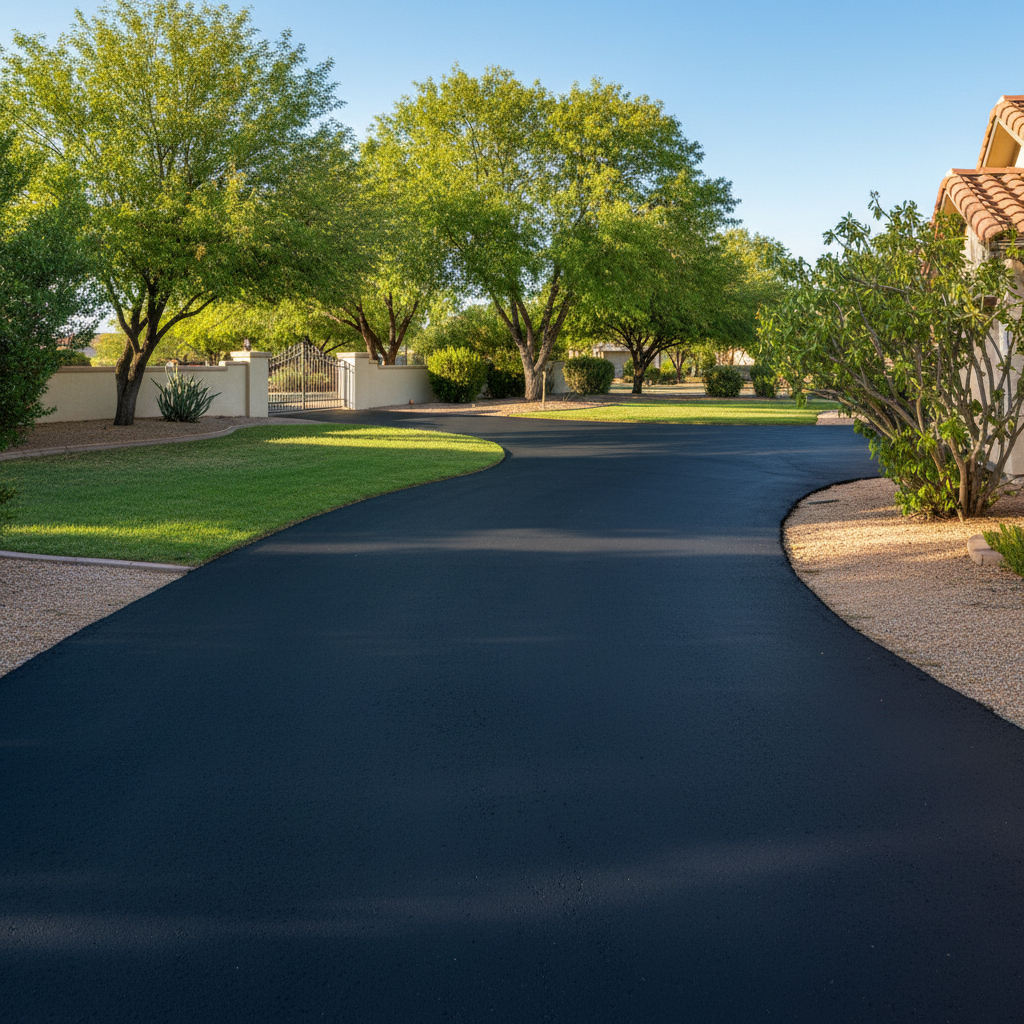
That intense desert sun beating down on your driveway is not doing your pavement any favors. If you live around Sonoma Ranch or out in the Mesilla Valley, you already know how brutal our summer heat and sudden monsoon downpours can be on outdoor surfaces. Asphalt takes a real beating here, drying out and turning brittle faster than it would in milder climates. That is why keeping up with sealcoating is the best way to protect your investment.
Here is what regular maintenance actually looks like around your property. You do not need a fancy toolkit, just a bit of consistency. Keep the surface clean by sweeping away dirt, tumbleweeds, and organic debris that trap moisture against the pavement. Wash away oil or chemical drips quickly because petroleum eats right through asphalt binder. If you spot tiny hairline cracks starting to spiderweb across the surface, do not wait until monsoon season to deal with them. Grab some rubberized crack filler before water gets down into the base course.
So how do you know when it is time to put down a fresh coat of sealer? Look closely at the color. If your deep black driveway is starting to look faded, chalky, or gray, the binder is wearing thin and the aggregate is exposed. Another sign is when you start seeing loose sand or small stones gathering at the edges of the pavement. Valley Asphalt Solutions tells property owners to test the surface by running a key across it. If it easily gouges or scrapes up powder, your asphalt is starving for protection.
Timing matters a lot in our region. You want to apply a fresh sealcoat every two to three years, depending on how much traffic your parking lot or driveway gets. Avoid doing it during the dead of summer when the pavement gets too hot for the product to cure right, and definitely skip it during the late summer rainy season. Spring and milder autumn days are usually the best time.
There comes a point where do-it-yourself methods and basic touch-ups are not going to cut it anymore. If you have alligator cracking spanning multiple sections, sinking areas where the sub-base has washed out during a heavy flash flood, or potholes bigger than your fist, patching and sealcoating will not fix the root problem. That is when you need to bring in heavy equipment and professional crews to mill, repave, or properly stabilize the foundation.
Taking care of your pavement should not feel like a second job. A little attention now saves you from paying for a total replacement down the road in Las Cruces.